

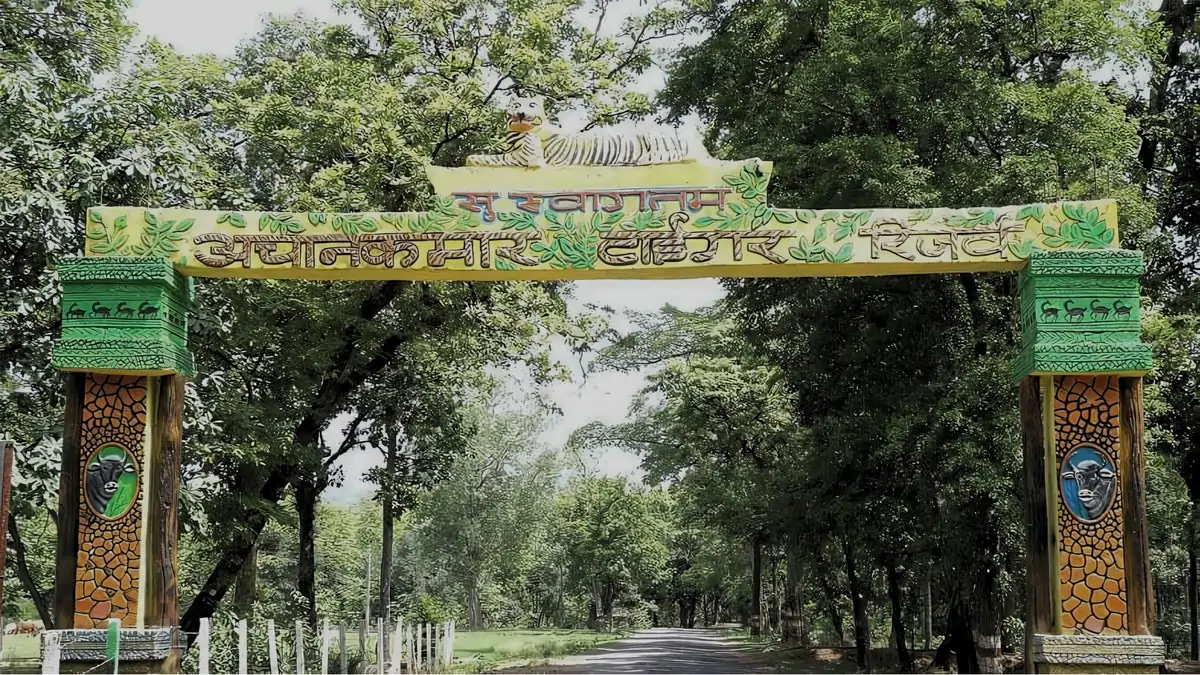

Achankmar, situated in the Achankmar-Amarkantak Biosphere Reserve, is one of the most beautiful, forested landscapes of Central India. This forest stretches across Chhattisgarh and Madhya Pradesh. This forest has a wildlife corridor connectivity with the world-famous Kanha Tiger Reserve. The reserve offers a combination of natural beauty, cultural richness, ecological and biological diversity, and wildlife conservation and ecotourism opportunities. This article presents a comprehensive overview of geology, hydrology, biodiversity, the tiger recovery story, the realities facing its communities, and the unfolding promise of ecotourism. The Achankmar forest is not only a biosphere reserve, but it is also a tiger reserve and a wildlife sanctuary.
Geographic Location and Zonation
The Achankmar-Amarkantak Biosphere Reserve covers around 3,835.51 km² at the meeting point of the Vindhya, Maikal, and Satpura hill ranges. Its topography is varied: steep mountains in the Maikal and Satpura ranges, plateaus like Amarkantak, shallow forested valleys, lowland rice fields, and wheat fields. The Amarkantak plateau is particularly marked by bauxite rock formations, which give rise to unique soil and microclimates.
Functionally, the biosphere reserve is divided into three zones:
- Core zone (551.55 km²): An area that is strictly protected is called the core zone. The core incorporates the Achankmar Wildlife Sanctuary and parts of Amarkantak.
- Buffer and transition zones (3,284.36 km²): These zones surround the core and allow regulated activities, which include forestry, agriculture, and villages.

Hydrology and Watershed Importance
Achankmar has an important position in the hydrology of the region. It occupies a major hydrological position as the source region for three major river systems of peninsular India:
- Narmada (draining west to the Arabian Sea) is a major river of Central India.
- Son and Johilla (draining east to the Bay of Bengal)
Many streams and nallahs intersect the landscape. Some of them are perennial, and some are seasonal. Seasonal streams dry up during the hot summer months. These waterbodies create a microclimate where dense riparian forests flourish and form lush alluvial soil. They also play a major role in maintaining biodiversity and supporting the farmers living in the buffer zone.
Geological and Soil Diversity
The geology of the region consists of different substrates: granite, gneiss, schist, sandstone, basaltic lava, and widespread bauxite outcrops. This diversity is supported by the different soil types, which include sandy soils, loamy soils, iron-rich red soils, black cotton soils, alluvial deposits, and bauxite-based clays. These different types of soil support different vegetation groups and forest types. This geological variety contributes to the region’s rich biodiversity.
Climatic Conditions
Three distinct seasons shape the ecology of Achankmar:
- Summer (March–June): Summer is hot and dry; in May and June, the heatwaves intensify the temperature, which remains until the onset of the monsoon.
- Monsoon (July–October): The southwest monsoon arrives around mid-June and remains till September. During this period the rivers and streams get replenished and groundwater recharges, which brings profuse greening.
- Winter (November–February): Arrives in the month of November; it brings cooler temperatures, especially in the early morning and evening. The temperature sometimes goes down to freezing point. Cooler temperatures and dry conditions make this the preferred season for wildlife observation and tourism.

Flora Diversity
Achankmar-Amarkantak is a botanical hotspot:
- Over 1,500 plant species from 799 genera have been reported from here; it includes 3 endemics, 282 regionally rare, and 39 globally threatened floral species.
- The forests are dominated by moist deciduous vegetation (covering 63% of the reserve), especially Sal (Shorea robusta) and its associates, with dry deciduous forests dominant in the southern areas.
- The major tree species include sal, teak, saja, bamboo, haldu, and various other hardwoods.
- The entire plant spectrum, thallophytes, bryophytes, pteridophytes, gymnosperms, and angiosperms, is well represented, including rare orchids, medicinal herbs, and introduced gymnosperms like Pinus and Deodar on the Amarkantak plateau.
- More than 105 medicinal plant species are found here, 25 of which are rare and endangered; many of them are used in local tribal medicine and cultural customs.
Important species:
- Gloriosa superba, Curcuma aromatica (wild turmeric), Chlorophytum tuberosum, Abelmoschus ficulneus, and various Dioscorea species.
Faunal Richness
The reserve is a treasure trove for wildlife enthusiasts:
- Major mammal species: tiger, leopard, sloth bear, gaur (Indian bison), sambar, chital (spotted deer), barking deer, chinkara, blackbuck, wolves, foxes, jackals, wild boar, giant squirrel, and two species of monkeys (Rhesus macaque and gray langur).
- Birdlife: More than 200 species of birds have been documented from here so far, which features resident and migratory birds, including the vulnerable lesser adjutant, the critically endangered long-billed vulture, and the near-threatened Malabar pied hornbill.
- Herpetofauna: Around 13 species, including snakes, lizards, and amphibians, are adapted to forest or riparian habitats.
- Invertebrates: The region has 52 species of scarab beetles (Scarabaeidae) from 24 genera, several species of butterflies, bees, dragonflies, and forest floor arthropods are found here.

Threatened and Important Fauna:
- Four-horned antelope, Indian wolf, wild dog, lesser adjutant, long-billed vulture, and sacred grove bush frog are among the species facing challenges due to habitat fragmentation.
The Tiger Recovery Story
The Achankmar Tiger Reserve is at the core of the biosphere reserve:
- Achankmar serves as a vital corridor for tigers and other big mammals, connecting the famous Kanha tiger reserve and Bandhavgarh tiger reserve, supporting landscape-level gene flow and population exchange.
- The Achankmar historically was considered a stronghold of tigers, but in earlier years, tiger populations went down. The historical counts included 26 tigers in the year 2004, a subsequent decline, and a recovery in recent years. By 2025, the number of resident tigers had risen to 10-18, largely due to improved habitat restoration and management, increased prey base, anti-poaching patrols, and the arrival of a tiger named Jhumri from Bandhavgarh (through the wildlife corridor).
- Tiger recovery is not only protection but also engagement of local villagers, awareness, conflict mitigation, and corridor management to ensure the movement of tigers and other large mammals safely between landscapes.
The reserve is also home to 108 leopards as per the census conducted with the All-India tiger monitoring project 2022. It also supports a healthy population of other rare and endangered mammals and reptiles.
Cultural and Socioeconomic Dimensions
Achankmar biosphere reserve is woven with human presence:
- 416 villages and two urban centers are within the reserve. Of these, 349 are “revenue villages,” and 67 are “forest villages”.
- The reserve sustains over 436,000 people from 27 tribal and non-tribal communities. Major communities residing in the reserve are Baiga (PVTG), Gond, Yadavs, and others.
- Livelihoods of the community are a mix of agrarian and forest-based, which includes rice, wheat, millets, non-timber forest products, bamboo crafts, and the collection of medicinal plants. Many tribal groups possess traditional knowledge of forest management, wildlife, and herbal medicine, which is crucial for the survival of the community and conservation of nature.
Religious and historical significance:
- The Amarkantak plateau, the source of the Narmada River, is a religious site for Hindus, Jains, Sikhs, and other religions. Pilgrimage, temple complexes, and forest shrines add to the region’s cultural landscape.
Community, Conservation, and Restoration Initiatives
- The biosphere reserve’s zoning is designed for participatory management, and the tribal and local communities are actively participating in sustainable development and biodiversity conservation in the reserve.
- Restoration measures include soil and moisture conservation, grassland management and revival, construction of check dams, bamboo forest rehabilitation, and eco-development committees.
- Conflict mitigation and awareness programs (especially around tiger and leopard) are expanding, with more focus on timely compensation, training for safety, and inclusion of locally relevant solutions.

Ecotourism: Opportunities and Challenges
Ecotourism at Achankmar is developing as a tool of livelihood and wildlife conservation:
- The region’s scenic beauty, which includes steep hills, river valleys, and lush forests along with rich wildlife and tribal culture, offers immense potential for sustainable and responsible tourism.
- Activities: jeep safaris, guided nature walks, birdwatching, photographic tours, and an experience of a visit to the tribal village.
- Cultural tourism: Amarkantak’s temple complexes and river sources are a great attraction for pilgrims, which is an opportunity for convergence with wildlife and natural history tourism.
- Infrastructure: New forest rest houses, eco-lodges, regulated visitor facilities, and crafts markets are being developed to promote ecotourism. Regulations on visitor numbers, waste management, and community participation are being promoted to minimize negative effects.
- Optimal season: November to June, when forest access and wildlife sighting are best.
Key considerations for responsible tourism:
- interpretation centers for visitors for conservation education to promote awareness about conservation in the landscape.
- Revenue sharing and local empowerment, community-run ventures, handicraft sales, and local employment can incentivize conservation through direct benefits to the community.
- Strong control over the lodges and other ecotourism establishments is essential to prevent pollution, habitat disturbance, and cultural commodification.
Conservation Challenges and Future Prospects
Despite its strengths, Achankmar faces emerging threats:
- Population pressures in buffer zones, encroachment in the forests, illegal forest resource extraction, unsustainable & rowdy tourism, and development projects like road building and mining are affecting habitat and its connectivity.
- Fragmentation in forest corridors can hinder animal movement; water pollution and waste accumulation can threaten the riparian ecosystems.
- Climate change adds more risk, especially for vulnerable or endangered flora and fauna.
But the biosphere reserve’s community involvement, effectiveness in bringing back tigers, cultural diversity, and flexible restoration tactics give us hope:
- Ongoing conversations between travelers, researchers, conservation authorities, and local communities are leading to new ways for people to live together.
- New pilot projects are starting in eco-education, getting young people involved, sustainable harvesting, and keeping an eye on animals.
- To keep succeeding, we need to find a balance between protecting the environment and making sure everyone has a good life. This will make Achankmar a living laboratory for how people and nature can get along.
If you like our article, please give a read to Wild Animals Rescue: Handling, Rehabilitation & Ethical Care and What to expect on a luxury tiger safari in India?