


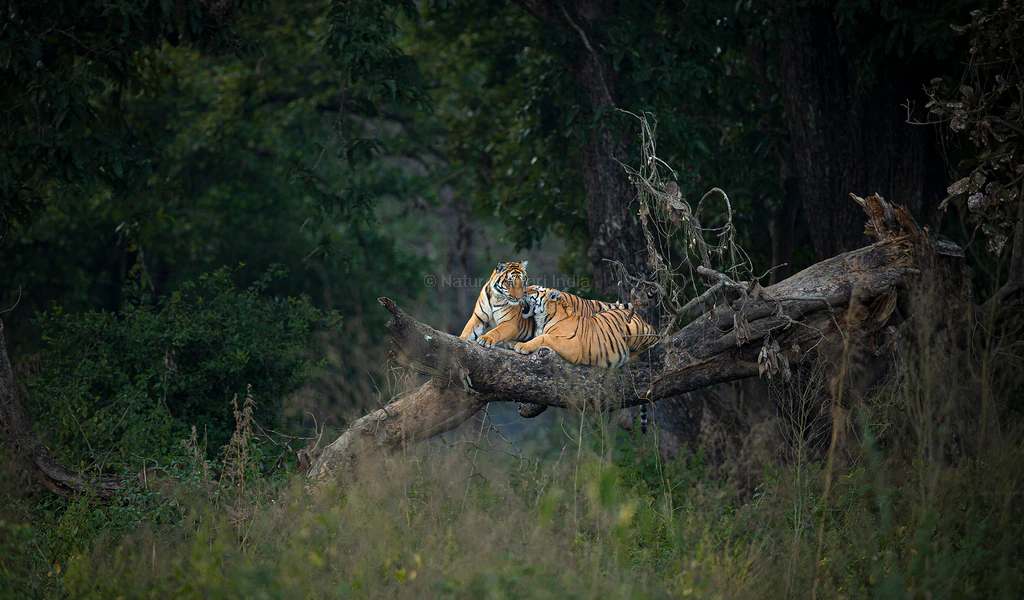
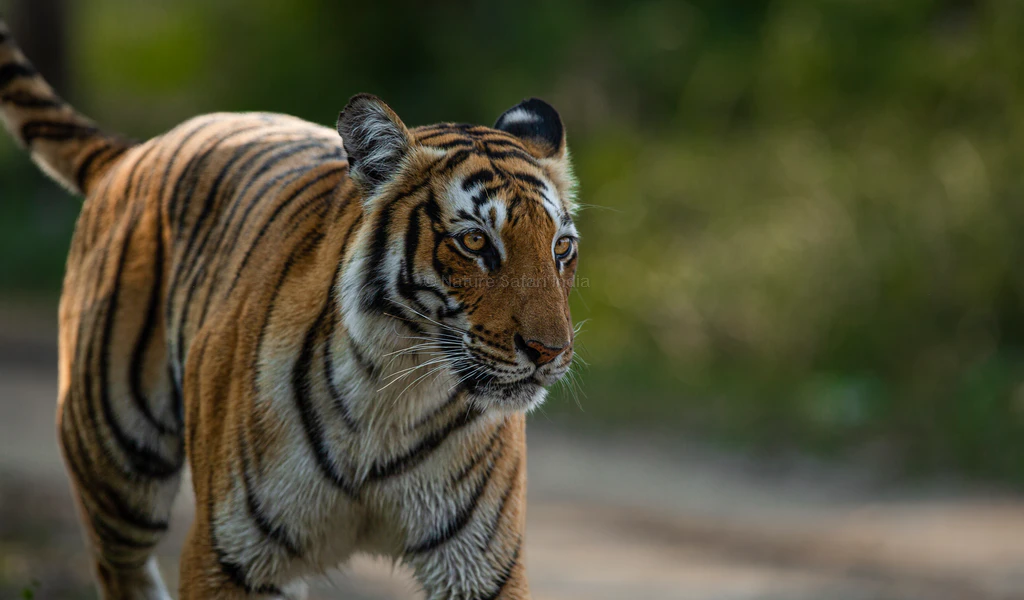
When most travelers think of Corbett, they think of tigers. And rightly so. Jim Corbett National Park is one of India’s most celebrated tiger habitats and remains a favorite destination for wildlife enthusiasts from around the world.
But the tiger is only one part of the Corbett story.
Spread across the Himalayan foothills of Uttarakhand, Corbett is a diverse ecosystem of sal forests, grasslands, riverine habitats, hills and streams. It supports Asian elephants, Himalayan black bear, sloth bear, leopards, several species of deer, wild boar, crocodilians, hundreds of bird species and a fascinating range of smaller mammals and reptiles.
The park’s different tourism zones add another dimension to the experience. Each zone has its own unique landscape and character, and if you understand these differences can help you to plan a safari based on more than just the possibility of seeing a tiger.
Whether you are a first-time visitor or an experienced wildlife traveler, Corbett rewards those who look beyond its most famous resident.
Understanding Corbett’s Safari Zones
Corbett’s tourism areas include Dhikala, Bijrani, Jhirna, Dhela, Durgadevi and the Garjiya/Sitabani landscape. Each offers a different combination of forest, grassland, river and hill habitats.
It is important to remember that wildlife does not follow tourism-zone boundaries. Tigers, elephants and other animals move across large areas, and sightings can never be guaranteed simply because a particular zone is considered good for a particular species.
The real difference between the zones is the habitat and safari experience they offer.
Dhikala: The Classic Corbett Landscape
For many wildlife visitors, Dhikala zone represents the best Corbett experience.
Its large grasslands, dense sal forests and the Ramganga River create one of the park’s most beautiful landscapes. The open grasslands provide excellent visibility and support large numbers of herbivores, while the surrounding forests provide cover for predators and smaller wildlife.
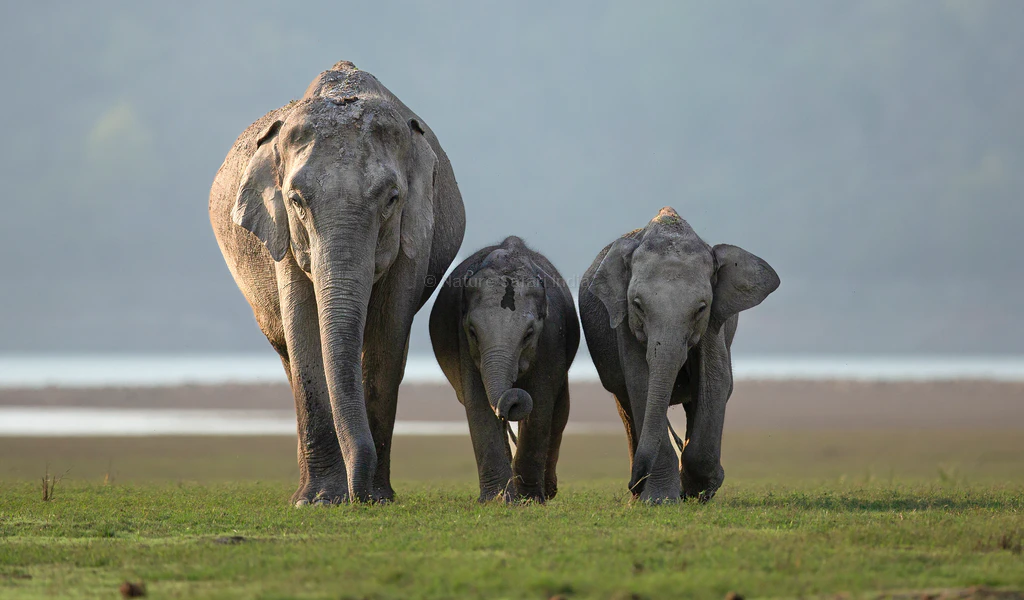
Dhikala is mostly famous for its elephant herd. Large herds may sometimes be seen moving through the grasslands or along forest edges, while solitary bulls can appear any time on safari tracks.
The Ramganga landscape also provides opportunities to observe gharial, mugger crocodiles, golden mahseer and waterbirds.
For birdwatchers, the combination of forest, grassland and water is especially rewarding.
Dhikala is always a great choice for travelers looking for an absorbing Corbett experience, especially those staying for three nights (maximum you can stay here) and taking all safaris.
Best for: elephants, grasslands, riverine wildlife, birding and Corbett landscapes.
Bijrani: Sal Forest and Grassland
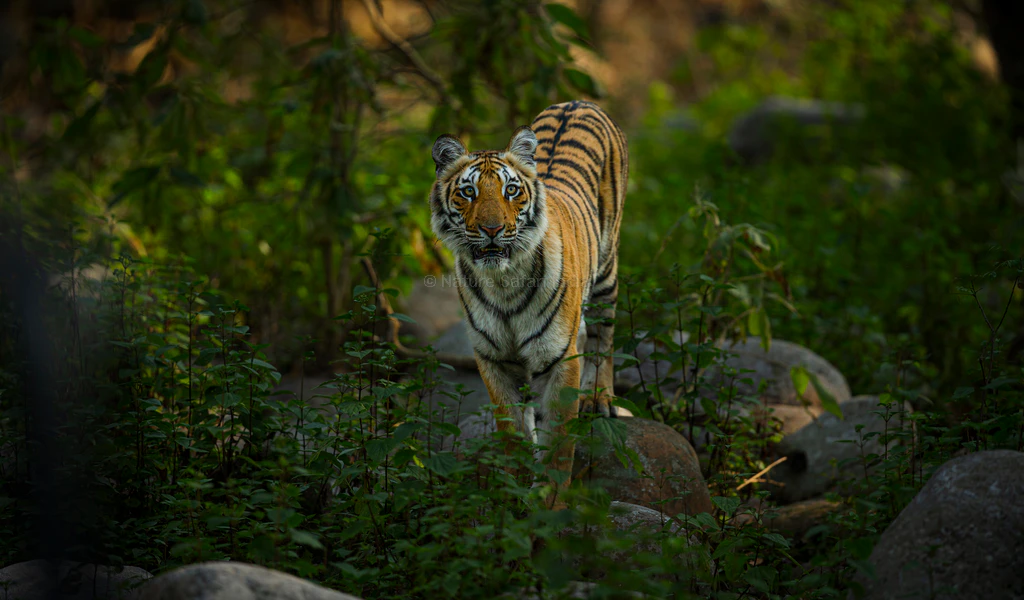
Bijrani is one of Corbett’s most popular safari zones and offers a varied landscape of dense sal forest, open grasslands and forest clearings.
The contrast between enclosed forest and open meadows makes every drive different. A safari may begin beneath a dense sal canopy and soon emerge into a grassland where chital or elephants are feeding.
Beyond tigers, Bijrani is particularly interesting for chital, sambar, wild boar and elephants. Langurs and rhesus macaques are also commonly encountered and can provide useful clues through their alarm calls when predators are nearby.
The zone’s different habitats support a rich bird diversity, including woodpeckers, barbets, drongos, parakeets and raptors.
Best for: Different types of forest and grassland, herbivores, elephants and birdwatching.
Jhirna: A Drier Side of Corbett
Located in the southern part of Corbett’s tourism landscape, Jhirna has a somewhat different character. Its forests can appear comparatively dry, especially during the hotter months.
This habitat variation makes Jhirna an interesting zone for wildlife enthusiasts. One of the species that adds excitement to a safari here is the sloth bear.
Sightings are never guaranteed, but the possibility of encountering this elusive mammal makes Jhirna attractive to experienced wildlife travelers. Elephants, chital, sambar and wild boar are among the other animals that may be encountered.
As summer progresses, water becomes increasingly important to wildlife, and observing animals around water sources can become an interesting part of the safari experience. Because of its dry character, Jhirna zone opens throughout the year, even during monsoon.
Best for: habitat diversity, elephants, herbivores and the chances of sloth bear sightings.
Dhela: A Mosaic of Habitats
Dhela is another interesting combination of sal forest, mixed types of vegetation, grassland and water-associated habitats.
Rather than being defined by one particular species, Dhela is best appreciated for its overall biodiversity. Elephants, chital, sambar, barking deer, wild boar and primates can all contribute to the safari experience.
The zone can also be rewarding for birdwatchers. Its varied habitats attract both woodland birds and species associated with more open or water-rich environments.
Dhela is particularly suitable for travelers who want to experience Corbett as an ecosystem rather than simply search for one flagship animal. Like Jhirna this zone is also open throughout the year.
Best for: general wildlife viewing, birding, elephants and habitat diversity.
Durgadevi: Hills, Rivers and Birdlife
On the northeastern side of Corbett, Durgadevi offers a more rugged landscape influenced by hills, forested slopes and river valleys.
The changing terrain provides a different visual experience from the flatter grasslands around Dhikala and the mixed forest of Bijrani.
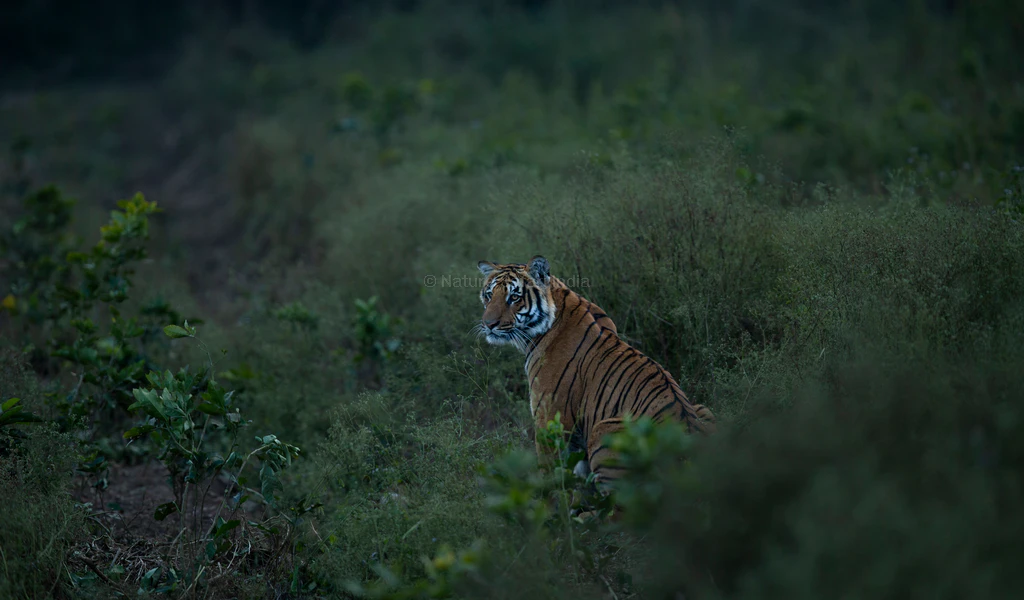
Durgadevi is especially attractive to birdwatchers and photographers interested in landscapes. The forest and riverine habitats support elephants, deer, langurs and a wide variety of birds.
The zone’s quieter and more rugged character can make it particularly appealing to travelers who enjoy exploring less predictable landscapes rather than focusing exclusively on large mammals.
Best for: birding, landscapes, river valleys and a quieter forest experience.
Garjiya and Sitabani: Beyond the Core Zones
The Garjiya/Sitabani landscape provides another way to explore the forests surrounding Corbett.
The administrative status, access arrangements and safari regulations here can differ from those of the core national park tourism zones, so travelers should check the latest rules before planning a visit.
The wider landscape nevertheless supports elephants, deer, birds and other wildlife and provides an opportunity to appreciate the relationship between Corbett’s forests, rivers and surrounding human settlements.
Wildlife Beyond Tigers
A tiger sighting may be the highlight of a Corbett safari, but the park’s biodiversity goes far beyond its big cats.
Asian Elephant
The Asian elephant is the most impressive large herbivore in Corbett.
Elephants can sometimes be seen in family groups moving through grasslands or forests. Watching a herd interact, particularly when young calves are present, can be one of the most memorable experiences of a safari.
Solitary bulls offer a very different encounter. Their big size and graceful movement through the forest can be awe-inspiring.
Elephants are ecosystem engineers, they create pathways and disperse seeds as they walk through the landscape.
Leopard
Corbett is also home to the Indian leopard, although sightings are considerably less predictable than tiger encounters.
Leopards are adaptable predators that use a variety of habitats but can be particularly difficult to spot because of their secretive behavior and preference for cover.
For wildlife enthusiasts, however, this unpredictability makes a leopard sighting especially rewarding.
Sloth and Himalayan Bear
Corbett provides habitat for two bear species; on higher altitude you can see Himalayan black bear and on lower altitude sloth bear is common. Though they are distributed throughout the reserve, but their sightings are particularly rare because they are mostly nocturnal and shy by nature.
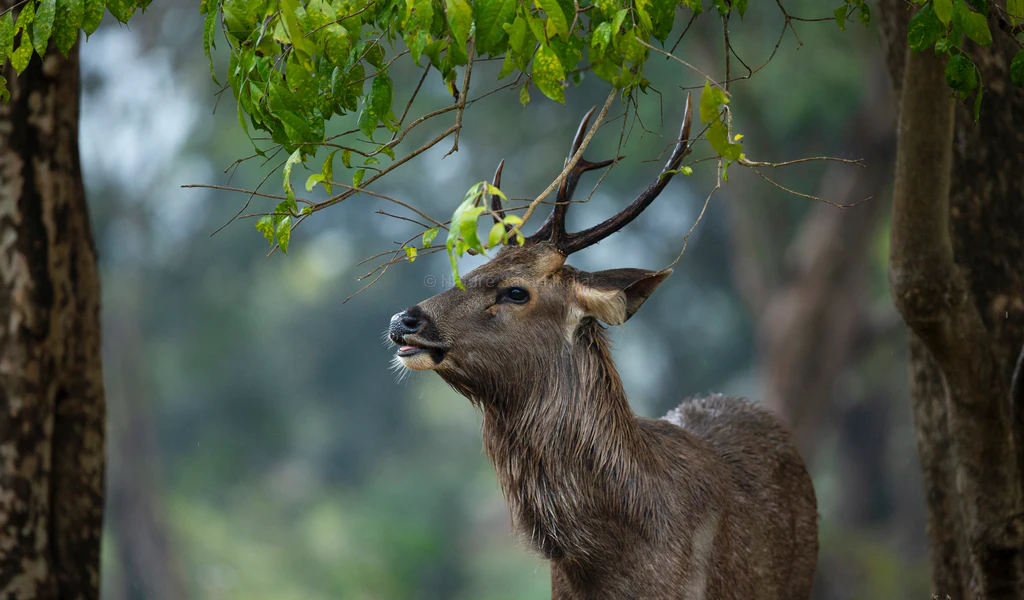
Chital, Sambar, and Hog Deer
Corbett’s herbivores form the foundation of its terrestrial food web.
Chital, or spotted deer, are among the most conspicuous mammals in the park and can often be seen in herds in suitable grassland and forest-edge habitats.
The larger sambar is another important species. Their distinctive alarm calls can sometimes alert visitors to predator activity.
Hog Deer is a species of deer which is exclusively found in Terai landscape of western and eastern Himalayas, in western are they share habitat with spotted deer while in eastern they are found exclusively in the reserve like Manas and Kaziranga.
Together, these herbivores provide the prey base that supports Corbett’s major carnivores.
Gharial, Mugger Crocodile and Golden Mahseer
Corbett’s rivers and reservoirs add an aquatic dimension to its wildlife.
The gharial, with its long, narrow snout, is a highly specialized riverine crocodilian. The mugger crocodile is more adaptable and can occupy a variety of aquatic habitats. Golden Mahseer is found in the Himalayan River and a highly in demand as a sport fish. Though fishing is not allowed inside Corbett but in some places, sports fishing is allowed near Corbett.
Ramganga and associated water bodies can also attract waterbirds, making riverine areas particularly interesting for photographers and birdwatchers.
Corbett: A Birdwatcher’s Paradise
Corbett is the India’s finest birding destination, with more than 600 species (almost half of the bird species count of India) recorded from the park and in its wider landscape.
Its wonderful bird diversity is a direct result of habitat diversity.
Depending on season and location, visitors may encounter great hornbills, crested serpent eagles, Pallas’s fish eagles, kingfishers, woodpeckers, barbets, collared falconets, parakeets, drongos, minivets, flycatchers and owls, among many others.
A knowledgeable naturalist can transform an ordinary safari into a fascinating birding experience by identifying calls and explaining behavior that visitors might otherwise overlook.
For anyone interested in birds, binoculars are almost as important as a camera.
Smaller Mammals and Reptiles
Some of Corbett’s most interesting wildlife can easily be overlooked.
Jungle cats, golden jackals, Indian grey mongooses, porcupines, civets and other smaller mammals inhabit the park. Sightings are often brief, making patience and careful observation essential.
The reptile diversity is equally interesting. Depending on habitat and season, visitors may encounter monitor lizards, snakes including King cobras, turtles, gharials and mugger crocodiles.
These animals may not appear on every safari checklist, but they are an essential part of Corbett’s ecological story.
Which Corbett Zone Should You Choose?
There is no single “best” zone. The right choice depends on what you want from your safari.
| Zone | Key Habitat | Wildlife Beyond Tigers |
|---|---|---|
| Dhikala | Grassland, sal forest, river | Elephants, deer, crocodilians, birds |
| Bijrani | Sal forest and grassland | Elephants, chital, sambar, birds |
| Jhirna | Drier forest | Elephants, deer, sloth bear possibility |
| Dhela | Mixed forest, grassland, water habitats | Elephants, deer, birds, smaller mammals |
| Durgadevi | Hills, forests and river valleys | Birds, elephants, deer, varied wildlife |
| Sitabani/Garjiya | Forest and surrounding landscape | Elephants, deer, birds and diverse wildlife |
The best strategy is not necessarily to choose a zone based entirely on its reputation for tiger sightings. If your interest is elephants, birds, landscapes or overall biodiversity, your priorities may be quite different.
Best Time to Experience Corbett
Winter, from November to February, is known for pleasant daytime temperatures and best opportunities for birdwatching, including winter migratory species.
March and April are the warmer months and increasing wildlife activity around water sources. Vegetation also becomes more open in some areas.
May and June are the hottest months, but the dry conditions can make water sources particularly important to wildlife. Early morning safaris can be especially rewarding.
Safari-zone opening timings and permit regulations change seasonally, so it is important to check with your travel agent before travelling.
How to Make Your Corbett Safari More Rewarding
The best Corbett safari is not necessarily the one with the most dramatic tiger sighting. It is the one where you begin to understand the forest.
Don’t look only for stripes. Watch the chital, listen to langurs and notice changes in bird activity.
Learn animal alarm calls. A sudden change in behavior can reveal that something interesting is nearby.
Carry binoculars. Some of Corbett’s most beautiful wildlife is high in the forest canopy.
Spend time observing elephants rather than simply photographing them. Their social behavior can be fascinating.
Most importantly, travel with an experienced naturalist. A good naturalist can interpret tracks, calls, feeding signs, vegetation and animal behavior, turning a safari into a deeper natural-history experience.
Beyond the Tiger: Discover the Complete Corbett
The tiger may bring travelers to Corbett, but it is the diversity of the landscape that makes the destination truly special.
An elephant herd crossing a grassland, a sambar calling from deep within the forest, a leopard disappearing between sal trees, a great hornbill flying across the canopy or a gharial basking beside the Ramganga can all become defining moments of a safari.
Corbett is not simply a place to search for one magnificent predator. It is a living ecosystem where forests, grasslands, rivers, herbivores, predators, birds and reptiles are interconnected.
So, when planning your Corbett safari, don’t ask only, “Which zone gives me the best chance of seeing a tiger?”
Ask instead:
“Which part of Corbett will allow me to experience the greatest diversity of its wild landscape?”
Come for the tiger but take the time to discover everything else that makes Corbett extraordinary.