


Here is part two of what species I should look for when planning a visit to India’s wildlife. In the last part, we have discussed major flagship species that not only initiated the conservation effort in the respective landscape but are also major tourist attractions. In this blog, we will discuss more such species and the places where you can find them in their natural habitat.
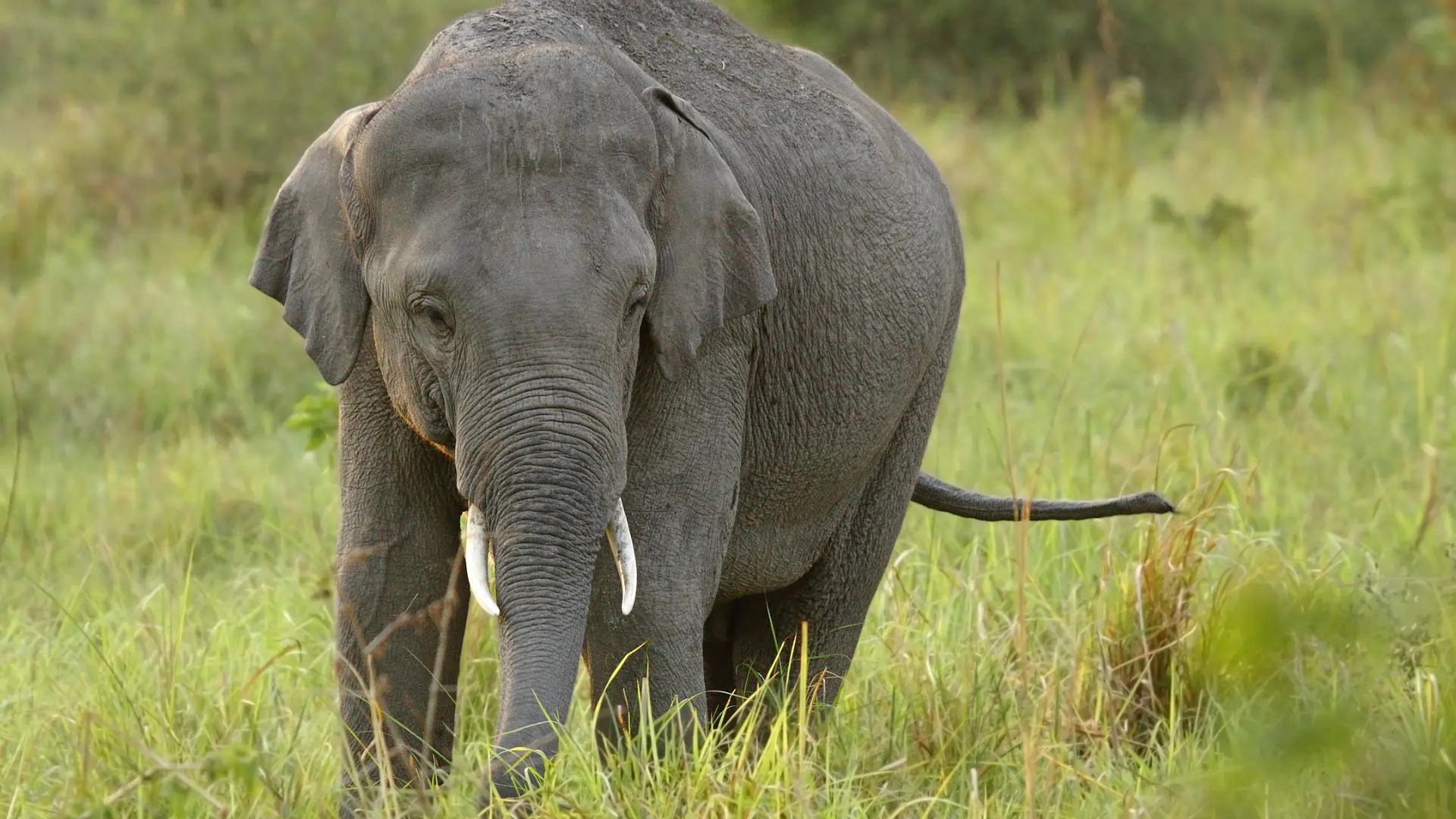
Asiatic Elephant (Elephas maximus)
With more than 60% of the Asiatic elephant population, India is the best place to see them in their natural habitat. They are the largest land animal in India and are also distributed to neighboring countries, like Nepal, Bhutan, Bangladesh, China, and Myanmar. They are smaller than their African cousins. Morphologically, they look different from African elephants in terms of a double-domed forehead, wedge-shaped ears, and a smooth trunk ending in one tip or finger. Only male Asian elephants have large tusks; females have smaller tusks, which are hardly visible. The best place to find Asiatic elephants includes Jim Corbett National Park, Bandhavgarh National Park, Kaziranga National Park and more.
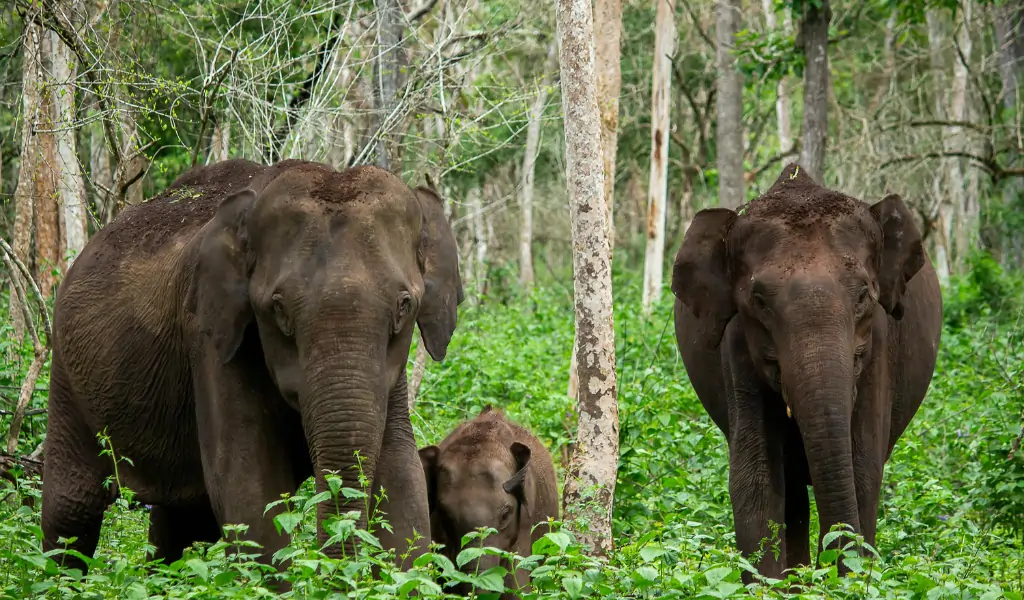
The Asian elephants are distributed across several landscapes in India and can be included in any of the wildlife itineraries. The largest contiguous population is found in the Western Ghats and in the northeastern part of India. A small population is found in the Terai landscape and in parts of Central India and the Eastern Ghats. In the Western Ghats, you can see the largest congregation of the Asian elephants in the world in the summer months in Nagarhole Tiger Reserve, because all other water sources in nearby forests are dried up, and the only water available is in the reservoir in Nagarhole.
Kaziranga in northeast India and Corbett in North India are other places to see them in the wild. In central India, recently elephants have made the Bandhavgarh tiger reserve their home, so if you are planning to do only central India and want to see the elephants, then don’t forget to add Bandhavgarh to your itinerary, because you will see tigers and elephants both in the same place.
Lion-tailed Macaque (Macaca silenus)
A species of macaque that is endemic to India’s Western Ghats. They are very unique-looking, medium- to large-sized macaques found in the evergreen and deciduous forests of the Nilgiri hills of the Western Ghats. They can be recognized by their grey facial mane and a medium-sized tail with a prominent tuft of longer hair. They are always an attraction for those who love to see primates in their habitat.
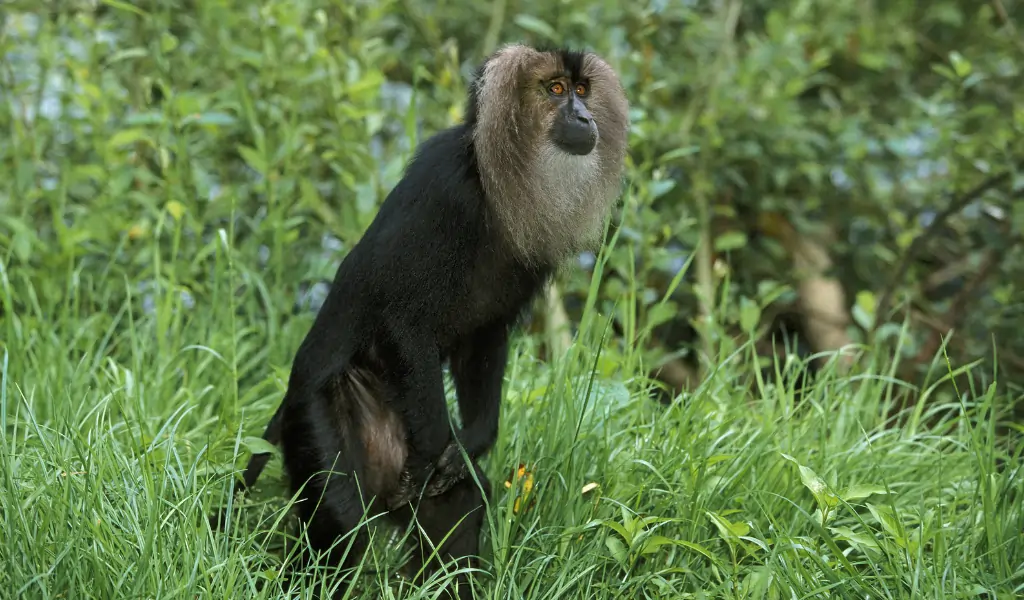
If you want to see them, then you have to make a plan to visit the Southern part of India, which is mostly untouched, and mass tourism is still far away from many places. You can see them easily in Valparai, a tea estate surrounded by the forests of the Anamalai Tiger Reserve, and also in Silent Valley National Park and Wayanad Wildlife Sanctuary. These places can easily fit into any itinerary of South Indian wildlife.
Nilgiri Langur (Semnopithecus johnii)
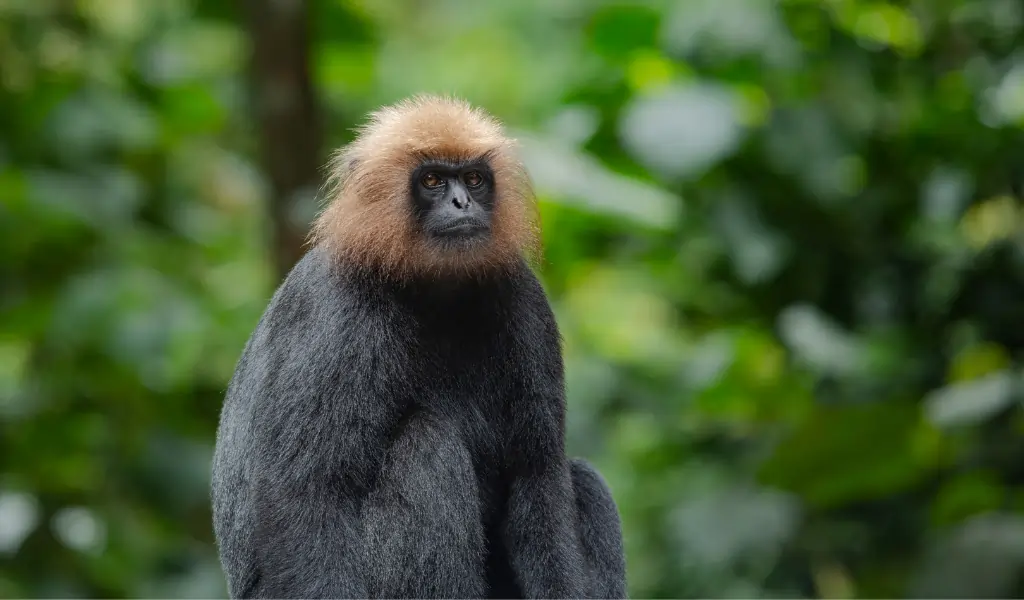
Another endemic primate of the Western Ghats, the Nilgiri langur, is a common rainforest monkey. They almost look similar to the lion-tailed macaque (LTM), but they have a yellow-tinted coiffure, while the LTM has an ashy gray mane. The tail of the Nilgiri langur is longer than that of the LTM. You can see both primates in the same forests, such as Valparai, Wayanad, and Anamalai Tiger Reserve.
Nilgiri Tahr (Nilgiritragus hylocrius)
An endemic species and the only mountain goat found south of the Himalayas in India. They look like the shorn version of the Himalayan Tahr, which has lots of hair. They are found in the Shola grasslands of the Nilgiri mountains. They are expert climbers, and seeing them walking and climbing easily on the steep slopes is an unforgettable moment.
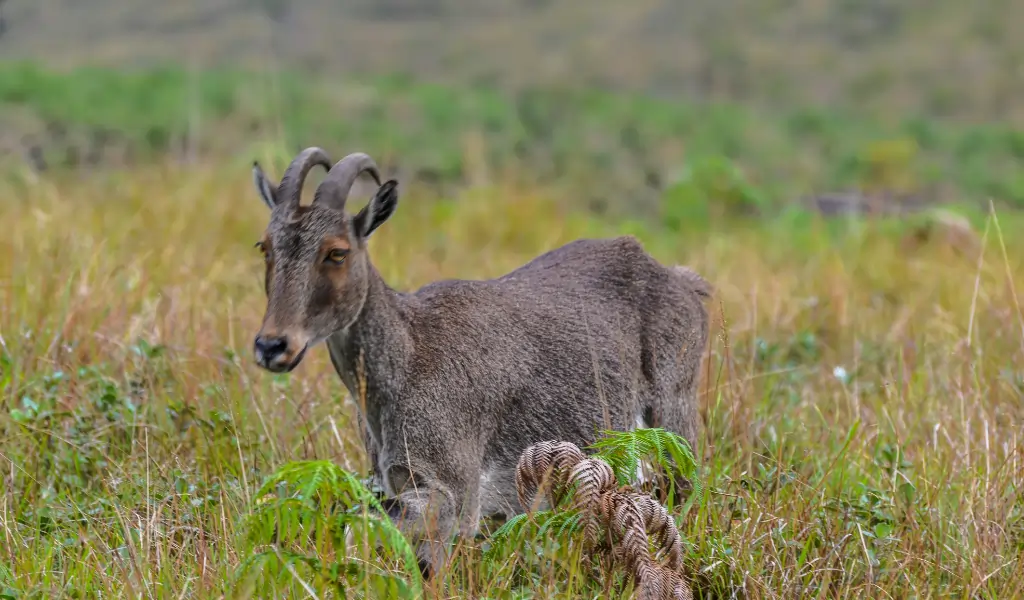
If you want to see them, then you have to visit Eravikulum National Park, a high-altitude shola grassland, which is in the state of Kerala. You can include this in your itinerary either as part of the Kerala wildlife and culture experience or alongside other wildlife itineraries in South India.
Golden Langur (Trachypithecus geei)
A species of langur discovered in the 20th century and found only in the Indian subcontinent, the golden langur is one of the most beautiful species of langurs. They are known for their fur, which looks golden in color during peak breeding season, which is October to March.
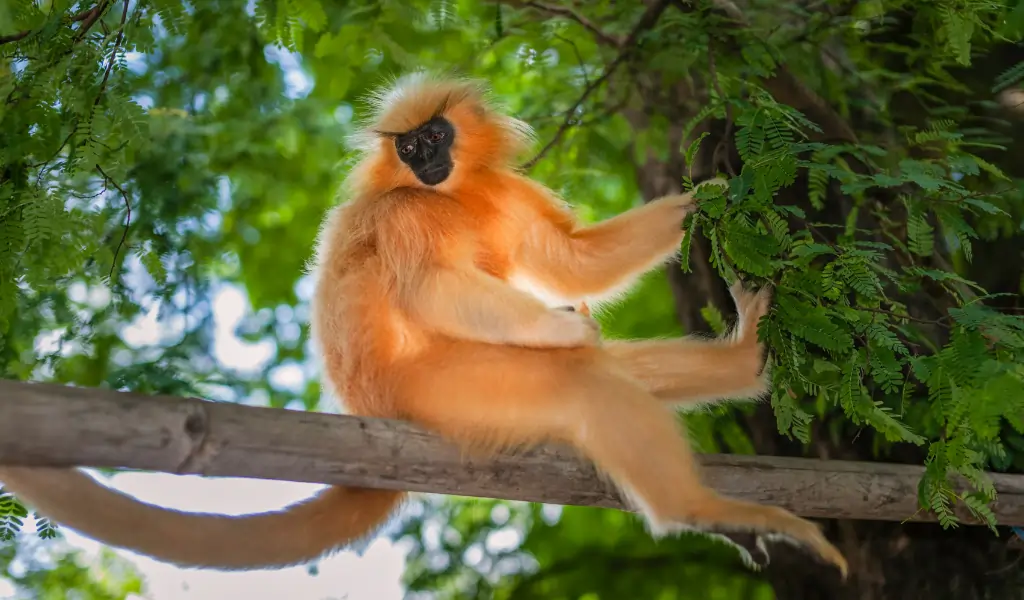
They are found in India and Bhutan; in India, they are found in Manas National Park. You can plan your itinerary, adding Kaziranga and Manas, both tiger reserves, and also, if you want to add, you can also add the Sundarbans tiger reserve, which is a mangrove forest known for tigers, crocodiles, and birds and close to Kolkata, from where you can catch the flight to Jorhat, from where you can reach Kaziranga and then Manas].
Blackbuck (Antilope cervicapra)
An endemic antelope of the Indian subcontinent, they are one of the most beautiful antelope species in India. The species enjoys the highest protection under the Wildlife Protection Act of India and is also protected by a particular community in the western part of India. The adult males are dark brown to velvet black with a white underside and a long, spiral horn, while females and young are fawn or tan above and white below. Two subspecies of blackbuck are found in India, the southeastern and northwestern.
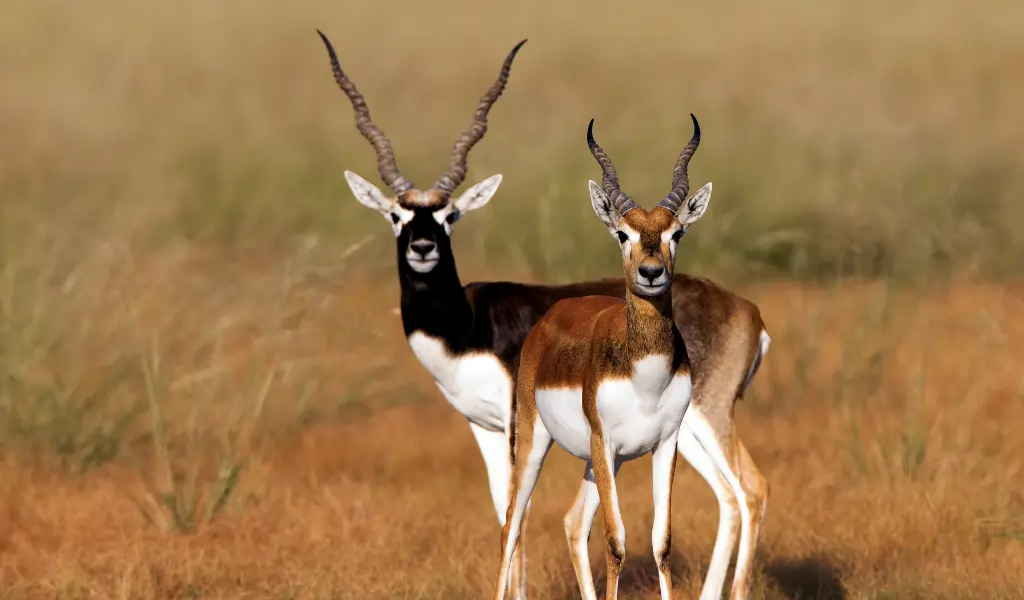
Though they are distributed throughout India, seeing them in the forests is not easy, as they are very shy and run away after any disturbance. There are places where you can see them quite easily, and the top among them is Velavadar or Blackbuck National Park in Gujarat, a small, protected area famous for blackbucks, wolves, and striped hyenas. Those who want to see the southeastern subspecies can go to Point Calimere Wildlife Sanctuary. For Velavadar, you can add this sanctuary to any of the existing itineraries of Gujarat or Rajasthan. Velavadar is a part of the wildlife itinerary of Gujarat, which also includes Gir National Park for lions.
Sloth bear (Melursus ursinus)
The most common bear of India, the sloth bear, is endemic to the Indian subcontinent. They are the only bear found in peninsular India. Earlier, they were distributed to a greater extent in the subcontinent, but now their population is limited to only India, Nepal, and Sri Lanka.
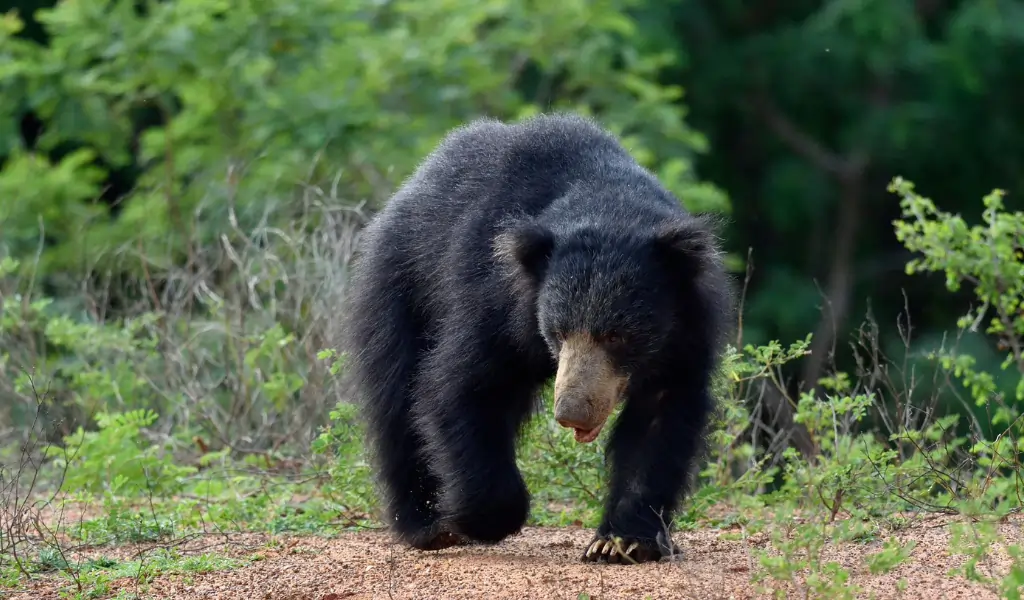
The sloth bear is a forest bear with a long snout and long shaggy hair. They are not related to the sloth, a South American mammal known for its slow movement. Sloth bears are called sloths because of their long claws, which they use to climb trees and break beehives and termite mounds.
They are very shy, so it’s difficult to see them, but in tiger reserves like Satpura, Tadoba, and Bandhavgarh, their sightings are good. In Satpura, particularly, they are frequently sighted. There are wildlife sanctuaries specifically created for the sloth bears: Daroji Sloth Bear Sanctuary in Karnataka and Jessore Sloth Bear Sanctuary in Gujarat.
Himalayan Brown Bear (Ursus arctos)
The Himalayan brown bear is the largest terrestrial carnivore of India. Himalayan brown bears are close relatives of the grizzly and Kodiak bears; however, they are smaller in size, yet still considered very large bears. Because their habitat is mostly above the tree line, they rarely climb trees and spend most of their time on land. In winter, they go into hibernation.
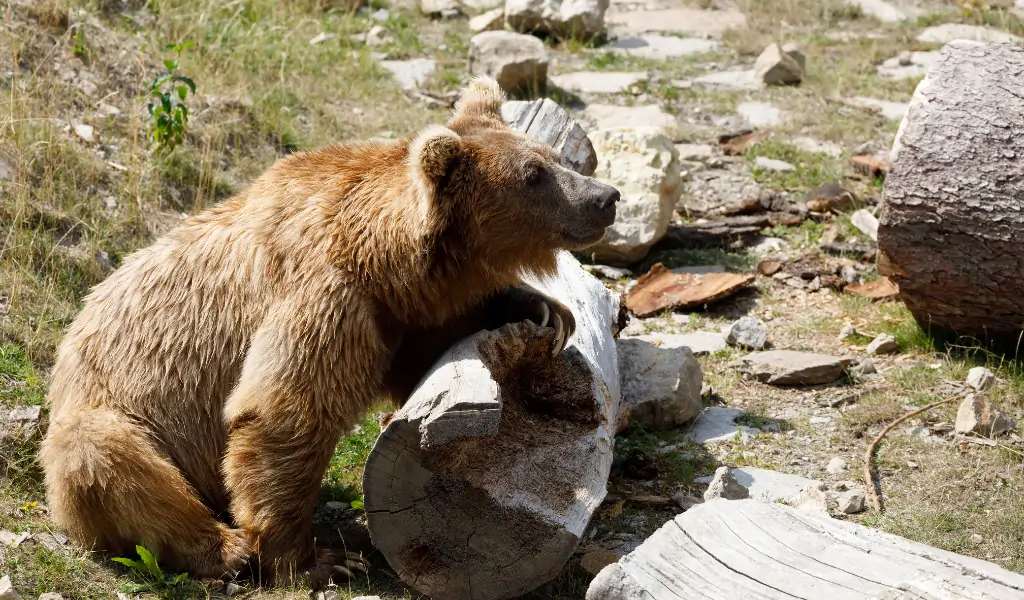
They are fairly common in some areas in the Western Himalayas, especially in the Great Himalayan National Park and Kargil. The best time to see them is after March, when they come out of their hibernation
Sightings of the animals in their respective habitats are always a matter of luck, and when you visit a place where seeing a particular animal is quite common, then you not only maximize your luck but also get a good interpretation by the naturalists.
The second part of the blog is concluded here, and in the next blog, I will cover some more mammals and reptiles.
Please give a read to What species should I look for when planning a Visit to India’s wildlife Part 1?